
In the UK early years setting, supporting pre-writing development helps children build confidence, improve control, and prepare for future literacy learning. When these skills are nurtured early, children are far more likely to experience success when formal handwriting instruction begins in Reception and Key Stage 1.
What Are Pre-Writing Skills?
These skills (sometimes called pre-handwriting skills) are the essential abilities children need before they are developmentally ready to write letters and numbers.
These foundational skills include:
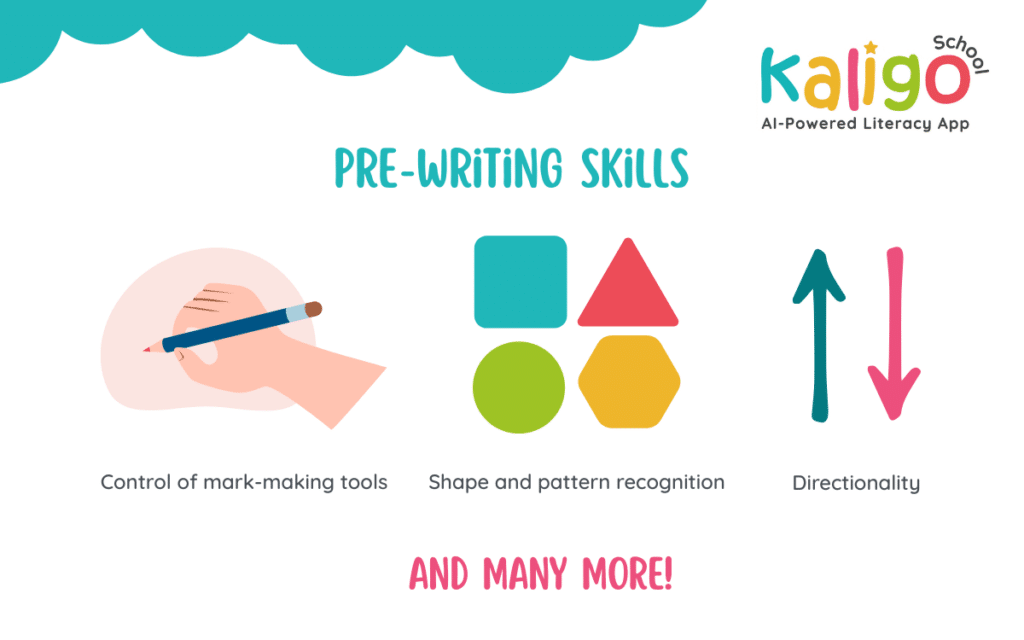
- Fine motor strength and hand control
- Hand–eye coordination
- Control of mark-making tools (pencils, crayons, chalk)
- Directionality (left to right, top to bottom)
- Shape and pattern recognition
- Visual tracking and spatial awareness
Within Nursery and Reception, development focuses on helping children gain control over their hand movements while strengthening the muscles needed for writing. Fine motor skills constitute an important part of the Early Learning Goals set by the Department of Education within the Early Years Foundation Stage Statutory Framework. These skills directly support smooth, legible handwriting later on.
Why Are Pre-Writing Skills Important in the EYFS?
Strong pre-writing skills are closely linked to handwriting fluency, confidence, and engagement in early learning. When children struggle with foundational motor skills, writing tasks can quickly become physically demanding and emotionally discouraging.
Supporting this development helps children to:
- Build confidence before formal handwriting instruction
- Strengthen the hand and finger muscles required for writing
- Improve focus, attention, and task endurance
- Develop early literacy readiness in line with the EYFS framework
For early years practitioners, prioritising these skills helps reduce pressure on children and supports a smoother transition into more structured writing activities in Reception and beyond.
Essential Pre-Writing Skills Children Need Before Handwriting
Effective pre-writing provision targets specific skill areas that directly support letter formation and control.
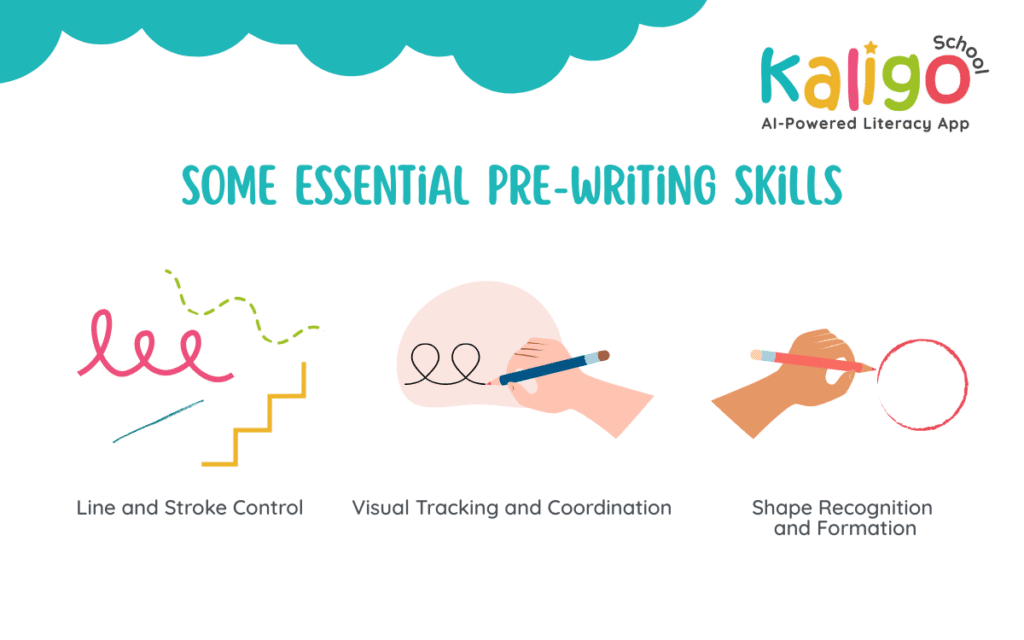
Line and Stroke Control
Children need opportunities to practise straight, curved, diagonal, and circular movements. These strokes form the building blocks of all letters and numbers.
Shape Recognition and Formation
Recognising and recreating basic shapes supports visual discrimination and spatial awareness: both essential for recognising and forming letters accurately.
Directional Awareness
Pre-writing development includes learning that mark-making follows a consistent direction, usually from left to right and top to bottom, in preparation for handwriting.
Visual Tracking and Coordination
The ability to visually follow lines, shapes, and patterns supports the coordination between eyes and hands that is required for writing.
Strengthening these areas helps improve accuracy and reduces fatigue when children begin formal handwriting instruction.
How to Support Pre-Writing Skills
They develop best in play-based, low-pressure environments where children are supported to progress at their own pace.
Strategies for Early Years Practitioners
- Model correct pencil grip and tool use through everyday activities
- Keep mark-making opportunities short, engaging, and developmentally appropriate
- Observe individual readiness and adjust expectations accordingly
- Offer positive, specific feedback rather than focusing on outcomes
Consistent support over time helps children build strong writing readiness and confidence.
Learn how to improve pre-writing skills using Kaligo.
Signs a Child Is Ready for Handwriting Instruction
Children are generally ready to begin more formal handwriting when they can:
- Hold a pencil or writing tool with reasonable control
- Follow simple directional movements
- Sustain attention during short mark-making activities
- Show interest in letters, names, or early writing attempts
If these signs are not yet evident, continued focus on pre-writing skills will support future success without unnecessary pressure.
Pre-Writing Skills and Early Literacy Development
These skills are a vital part of early literacy development in the EYFS. By strengthening fine motor control, visual coordination, and directional awareness, children are better prepared to engage in phonics, reading, and writing activities.
A strong foundation supports:
- Clearer handwriting
- Improved spelling accuracy
- Increased writing fluency in Key Stage 1
The Importance of Pre-Writing Skills in the Early Years
These skills play a crucial role in Nursery and Reception education. By prioritising writing readiness before introducing formal handwriting, practitioners and families help children develop the confidence, control, and coordination needed for long-term academic success.
Supporting this development early helps children form a positive relationship with writing, one that supports them throughout their educational journey.
Explore three ideas for pre-writing practice to put this into action.