Strong writing skills begin in the EYFS. The children practise pre-writing with activities such as sensory mark-making, loose parts play, dough work. Digital tools like Kaligo help develop fine motor control, hand strength, and coordination through play.
This article shares practical, EYFS-aligned ideas to support early handwriting skills and ideas to practise pre-writing. It also includes several free printable resources to download and use straight away in an early years setting.
Hands-On Pre-Writing Activities
Mark-Making in Sensory Trays
EYFS links: Physical Development (fine motor), Expressive Arts & Design
Resources: Sand, salt, soil, glitter, shallow trays, fingers, paintbrushes, sticks
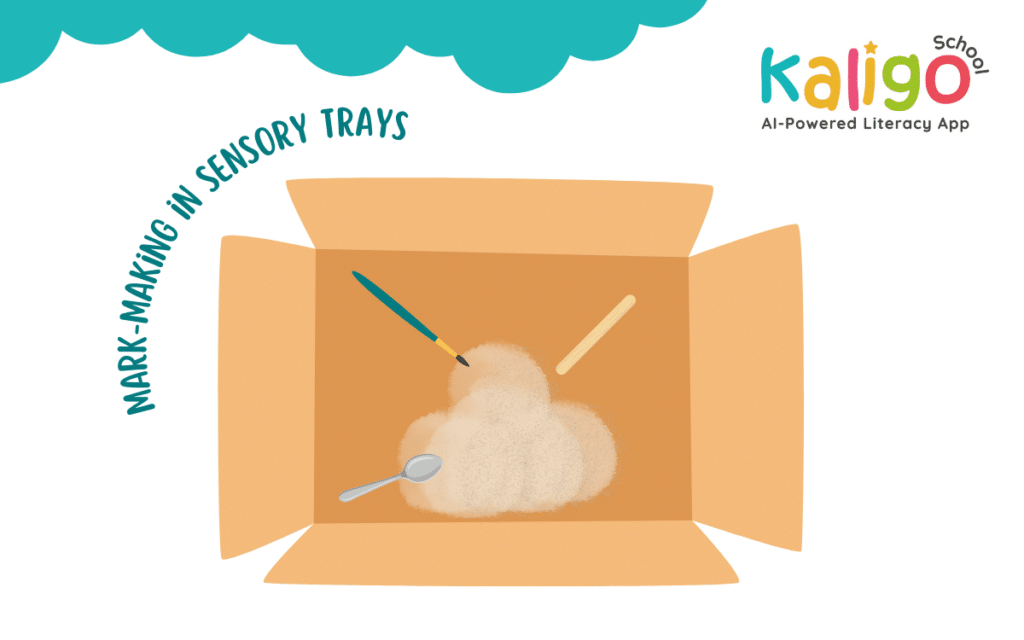
How to run it: Children make marks in sensory trays using fingers or simple tools. Model lines, circles, zig-zags, and waves rather than formal letter formation. You can prompt with language like “Can you make a long line?” or “What happens if you move your finger slowly?”
Why it fits EYFS: Focuses on exploration and control rather than outcome, supporting early mark-making and hand strength.
Loose Parts Line-Making
EYFS links: Physical Development, Mathematics (shape and space)
Resources: Lolly sticks, bottle tops, pebbles, shells, pipe cleaners, string
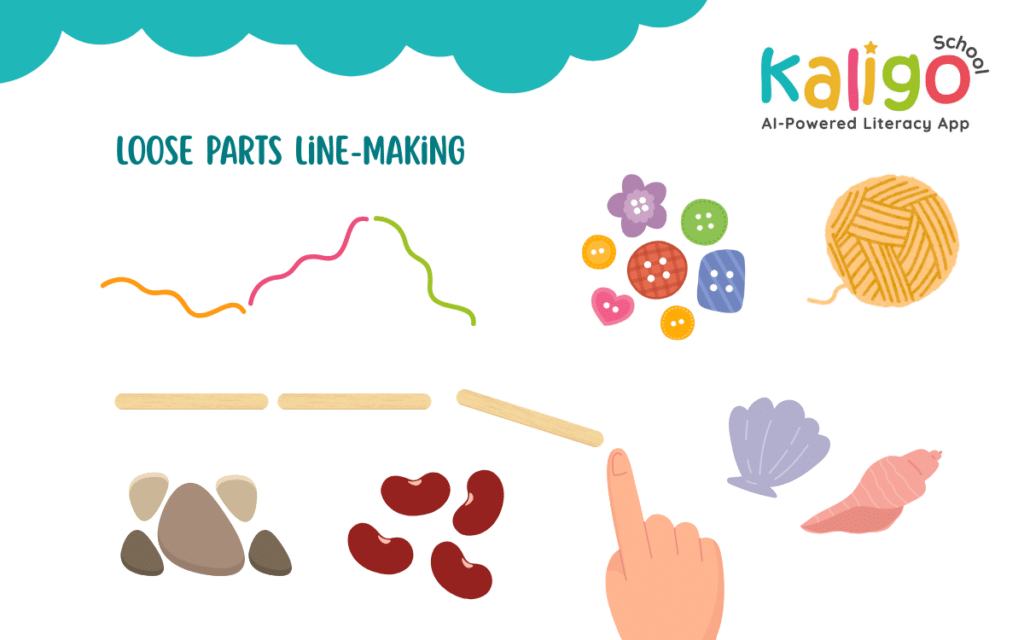
How to run it: Children use loose parts to create lines, patterns, and simple shapes on the floor or table. Adults can model vocabulary like straight, curved, long, short.
Why it fits EYFS:Encourages planning, spatial awareness, and control without the pressure of writing letters.
Funky Fingers
EYFS links: Physical Development (gross & fine motor), Communication & Language
Resources: Playdough, child-safe scissors, tweezers, beads, buttons
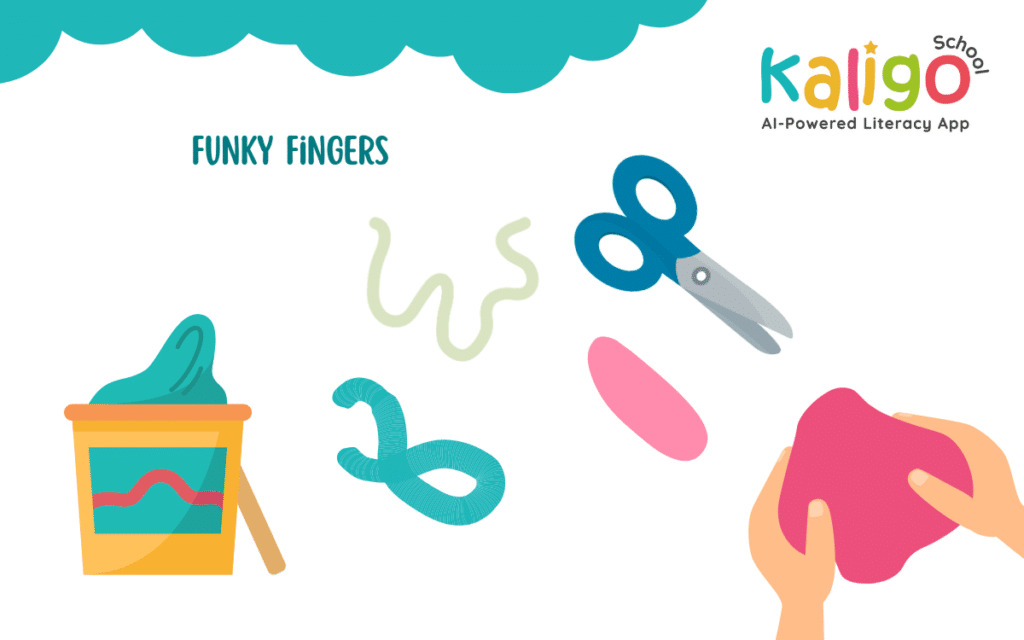
How to run it: Children pinch, roll, squash, and cut dough, or transfer small items using tweezers. You can add challenges like “Can you roll a long sausage?” or “Can you make a circle?”
Why it fits EYFS: Builds the core hand strength and coordination needed before pencil control.
Pre-Writing exercises in Kaligo
Kaligo provides structured exercises that help children develop the fundamental movements and control needed for early writing. These activities focus on tracing lines, curves, shapes, and patterns in a playful, digital environment. It allows room for pre-writing practise skills for children before forming letters.
Line and Curve Tracing
One of the first skills children need for writing is the ability to control basic lines and curves. Kaligo includes exercises where children trace straight, wavy, and zig-zag lines, as well as simple curves.
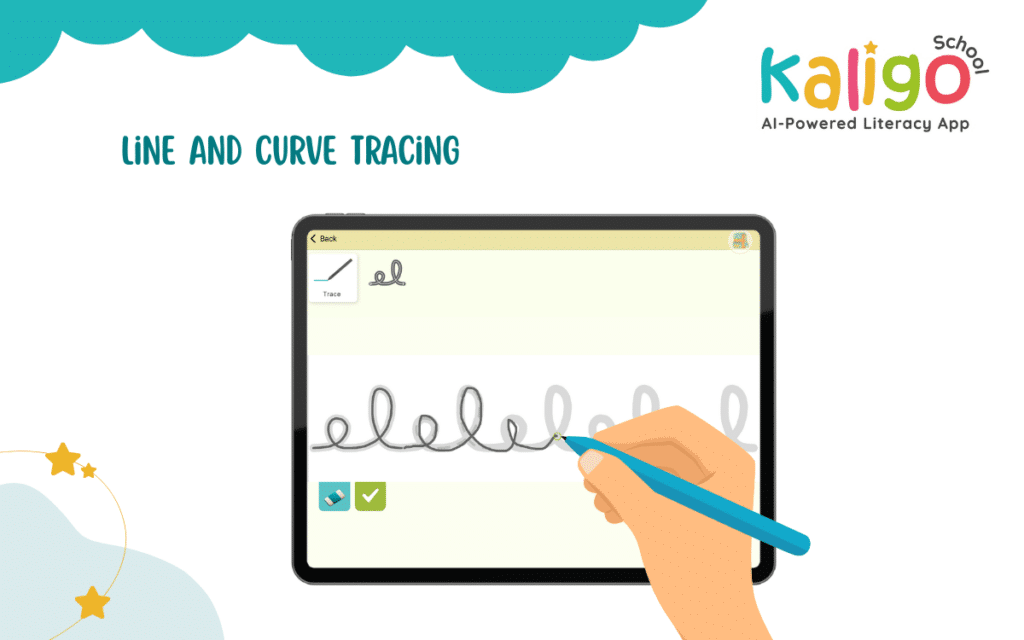
Concrete examples include:
- Drawing a straight line from top to bottom
- Following a loop pattern
- Tracing a bridge pattern
These exercises help children build hand control, coordination, and smooth, fluid movements, which are essential foundations for later letter formation.
Shape and Pattern Practice
After mastering lines, children can practise tracing simple shapes and repeating patterns. Kaligo offers exercises that guide children through circles, triangles, squares, and loops.
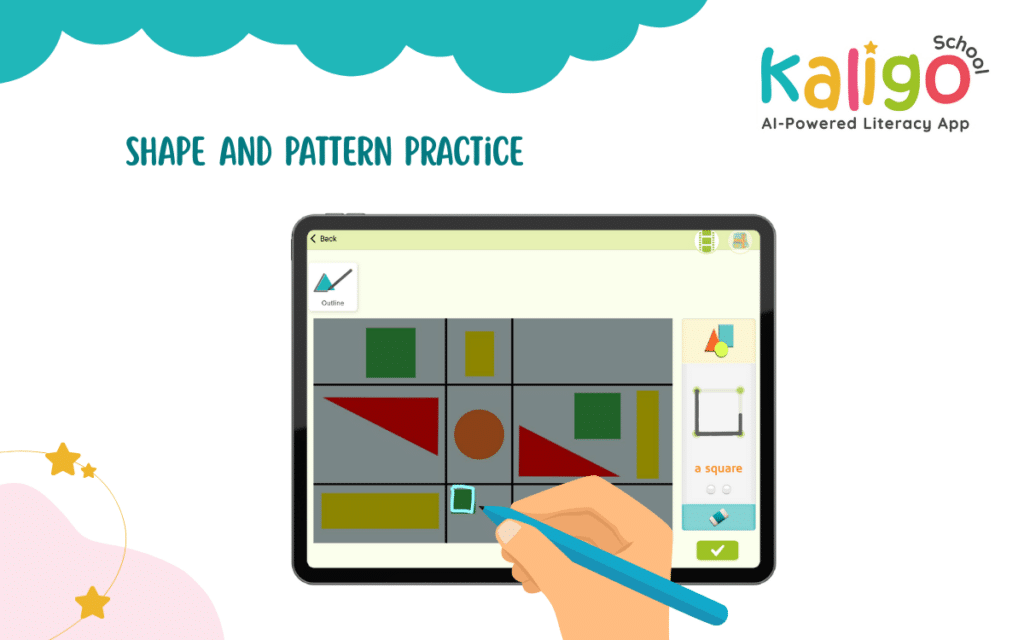
Concrete examples include:
- Tracing a circle
- Finding a shape within a complex picture
- Reusing shapes to create a picture
This type of practice strengthens directional movement, pattern recognition, and accuracy, while also introducing children to the shapes that appear in letters.
Stylus-Control Exercises
Using a stylus adds an extra layer of skill development, mimicking pencil use and reinforcing grip and pressure control. Kaligo exercises with a stylus challenge children to trace shapes accurately while controlling movement and pressure.
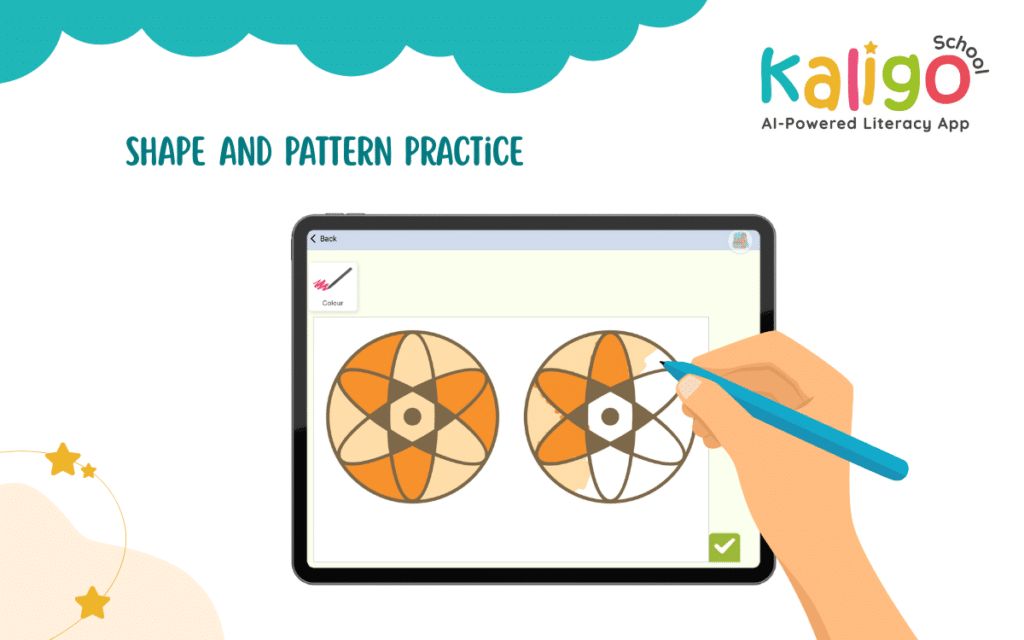
Concrete examples include:
- Tracing shapes
- Following loops and patterns
- Scratching and colouring pictures
Stylus exercises give children the experience of writing-like movements without the pressure of using a pencil on paper, strengthening the muscles and coordination needed for handwriting.
Want to know more? Read our article on colouring and drawing.
Free printable worksheets for pre-writing
These paper-based pre-writing worksheets support children in the early stages of writing development and are ideal for Early Years Foundation Stage (EYFS) and Key Stage 1. The set includes two printable worksheets: one focusing on straight lines and one on looped movements. Children trace vertical, horizontal, diagonal and curved lines using pencils, crayons or felt-tip pens, helping them develop control, coordination and confidence. They are the ideal resource to practise pre-writing.
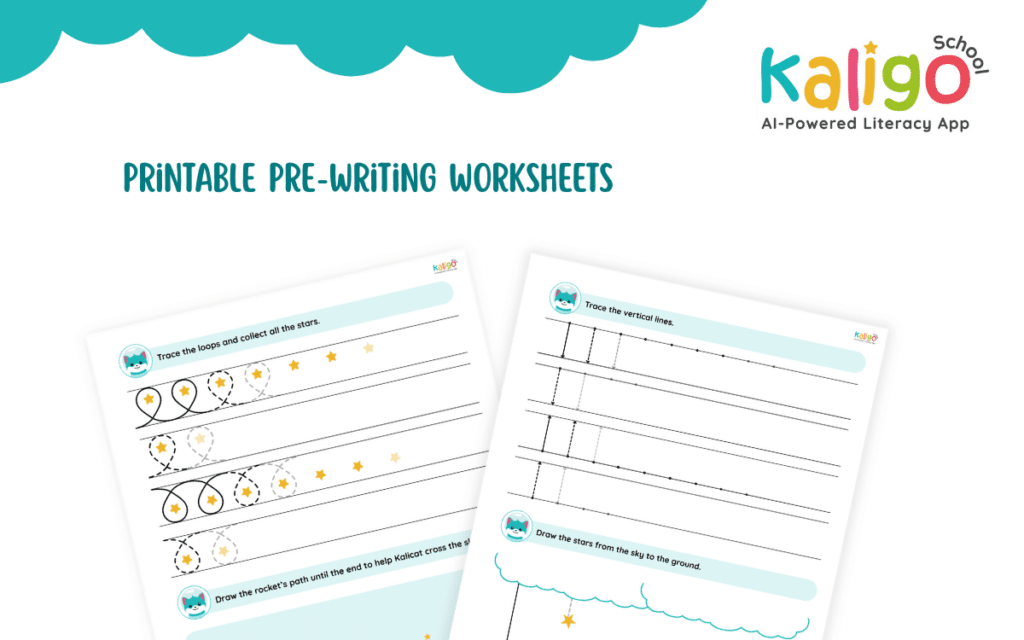
Using paper worksheets provides important hands-on learning benefits, including:
- Strengthening fine motor skills through real pencil pressure and grip
- Developing muscle memory needed for handwriting on paper
- Improving hand-eye coordination and spatial awareness
- Encouraging focus and reduced screen-based distraction
- Supporting correct posture and pencil control
These downloadable worksheets can be printed for repeated use in classrooms, nurseries or at home, or placed in reusable sleeves with dry-wipe pens. They offer a practical, low-prep resource for meaningful pre-writing
Try Kaligo For Free
Pre-writing is an essantial skill for handwriting. Children are able to practise pre-writing gestures with Kaligo. But Kaligo now goes beyond this, covering spelling, grammar, and sentence construction, allowing children to practise multiple literacy skills interactively. Teachers can try Kaligo over a period of 14 days for free by registering with an email address, with no obligation.
The platform is intuitive and easy to use, suitable for both classroom and home learning. Children can use a stylus or finger depending on the activity, while teachers monitor progress in real time. Tutorials, guides, and a chat function provide support, helping educators get the most out of the platform.