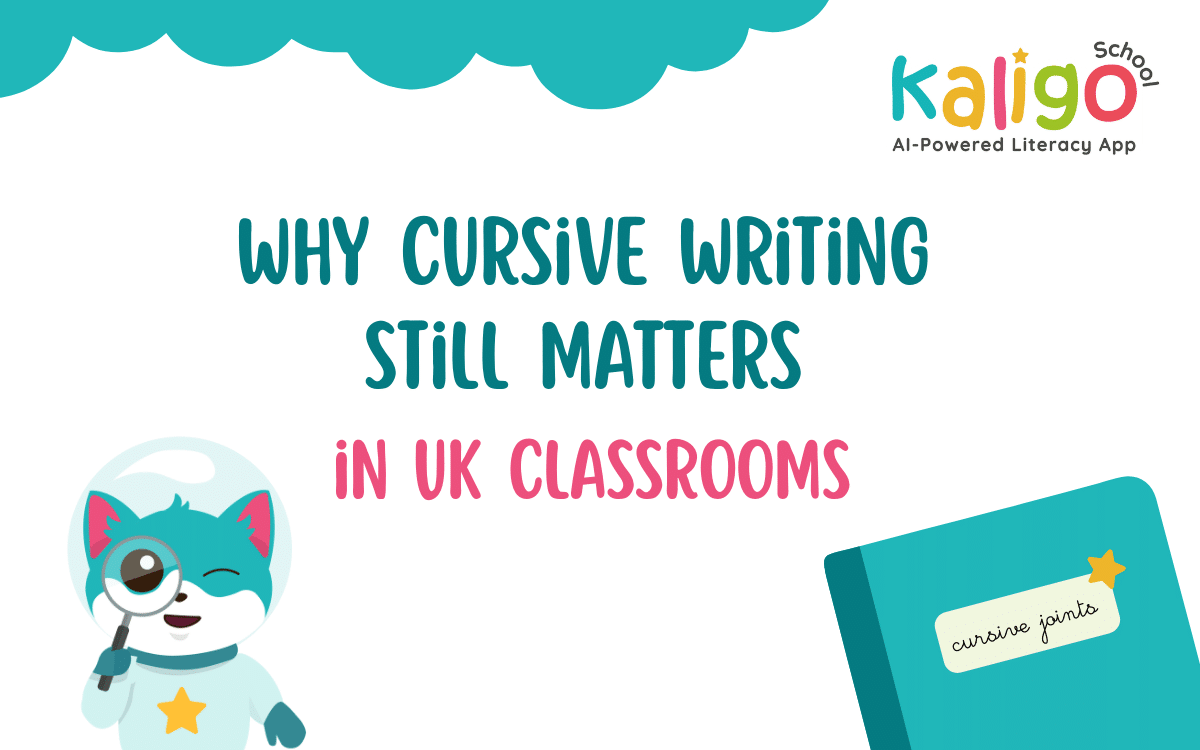
In today’s digital classrooms, many pupils are typing assignments or using unjoined script. However, cursive handwriting remains a core component of the primary English curriculum and plays a crucial role in literacy development, writing fluency and academic success.
For UK teachers, understanding the importance of cursive writing is essential, not only to meet national curriculum expectations but also to improve writing outcomes across Key Stages 1 and 2.
Cursive writing in the UK national curriculum
Cursive handwriting is not optional in England. The Department for Education states in the English national curriculum that pupils should be taught to form letters correctly and join them fluently by the end of Key Stage 1, with increasing speed and legibility in Key Stage 2.
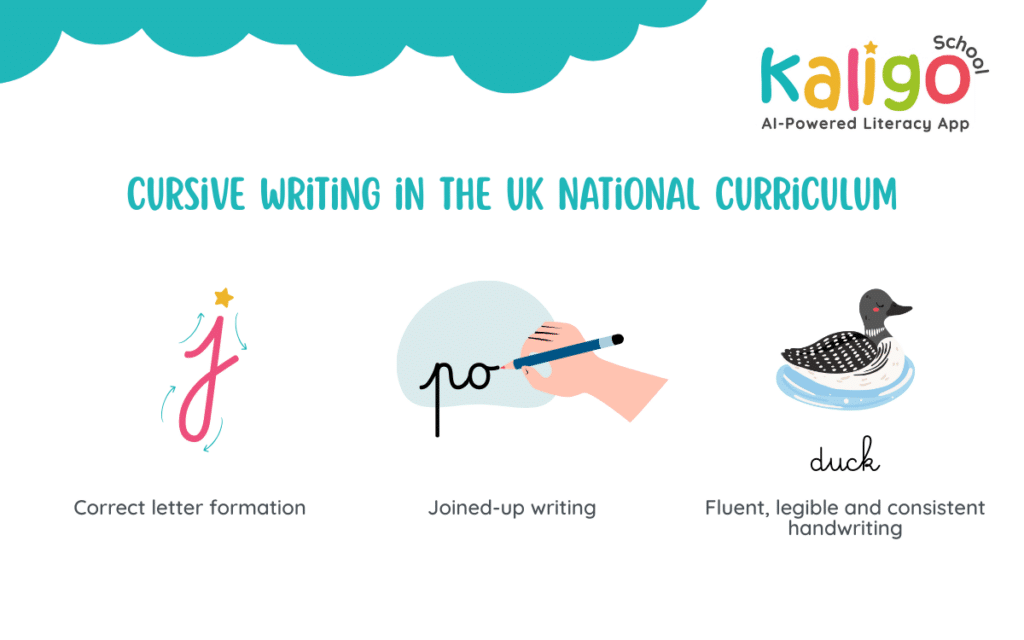
The national curriculum for handwriting emphasises:
- Correct letter formation from Reception onwards
- Joined-up (cursive) handwriting by Year 2
- Fluent, legible and consistent handwriting by upper Key Stage 2
For UK primary teachers, this makes it a statutory requirement. Schools that embed a consistent cursive handwriting policy often see improved writing stamina, presentation and composition standards.
The cognitive benefits of cursive handwriting
Research into handwriting and brain development shows that cursive writing supports cognitive processes differently from typing. The continuous movement involved in joined-up handwriting strengthens neural pathways linked to memory, language processing and fine motor control.
For primary pupils, cursive handwriting supports:
- The development of pre-writing skills, including fine motor skills and hand–eye coordination
- Stronger spelling retention through reinforced letter patterns
- Better reading fluency through consistent letter recognition
When children write in cursive, they develop motor memory for whole words rather than isolated letters. This reduces letter reversals and transcription errors, particularly for younger pupils and those with specific learning difficulties.
In short, cursive writing supports literacy development at a foundational level.
Cursive writing and writing fluency
One of the most significant benefits of teaching cursive writing in UK classrooms is improved writing fluency. Printing requires frequent pen lifts, which can slow pupils down and interrupt thought processes. Cursive handwriting reduces these interruptions, enabling smoother and faster writing.
This has a direct impact on:
- Extended writing tasks
- Timed assessments
- Writing stamina in Key Stage 2 SATs preparation
When handwriting becomes automatic, pupils can focus on vocabulary choice, sentence structure and text organisation rather than the mechanics of letter formation. The cognitive load is reduced. For teachers aiming to raise writing attainment, cursive fluency is a powerful lever.
Why cursive still matters in a digital age
Digital literacy is essential in modern education, but typing does not replace the developmental benefits of handwriting. Studies suggest that writing by hand improves information retention and comprehension more effectively than typing alone.
In UK primary schools, cursive writing lays the groundwork for:
- Stronger note-taking skills
- Better spelling accuracy
- Greater confidence in written expression
Rather than choosing between handwriting and technology, schools should aim for a balanced approach. Cursive handwriting builds the literacy foundation that supports digital learning later on.
Supporting cursive writing with Kaligo
Technology can enhance, rather than replace, handwriting instruction. Kaligo supports cursive writing development through interactive, guided practice.
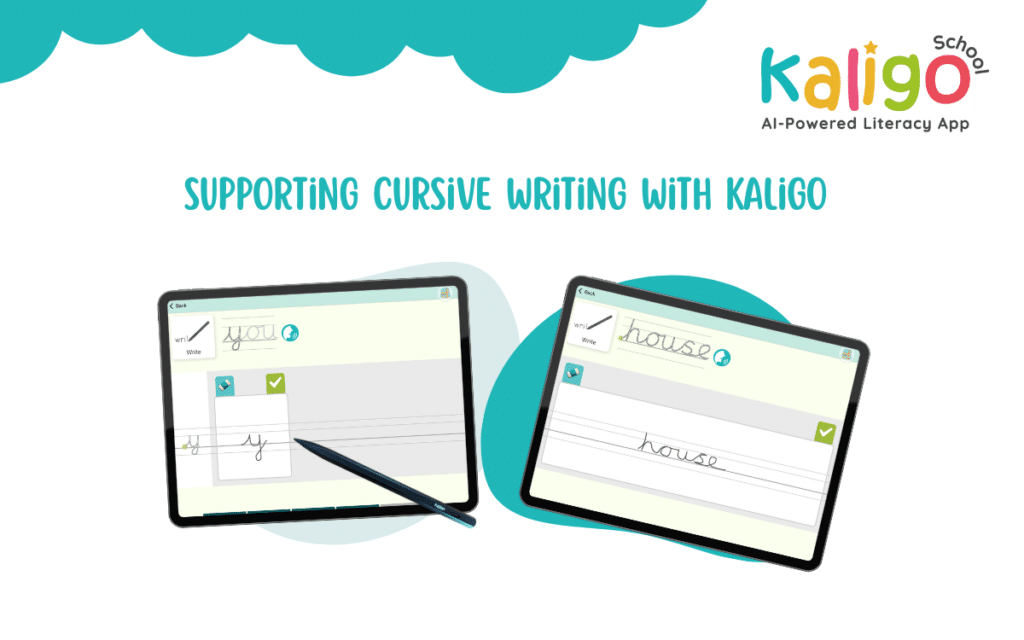
Kaligo uses AI handwriting recognition technology to provide instant, personalised feedback on:
- Letter formation accuracy
- Joining technique in cursive handwriting
- Writing fluency and consistency
For UK teachers, this means pupils can practise joined writing independently while still receiving structured guidance aligned with literacy objectives. Kaligo also connects handwriting practice to spelling and phonics, reinforcing broader literacy skills.
By integrating digital feedback with traditional handwriting pedagogy, Kaligo helps schools strengthen cursive writing instruction while supporting overall literacy attainment.
The ongoing importance of cursive writing in UK education
Cursive writing remains a vital skill in UK primary education. It is embedded in the national curriculum, supports cognitive development, strengthens spelling and reading, and improves writing fluency.
For UK teachers focused on raising standards in English, teaching joined-up handwriting is not simply about presentation. It is about enabling pupils to write with confidence, speed and clarity.
Investing time in high-quality cursive instruction, supported by consistent policy and effective tools, ensures pupils develop the strong literacy foundations they need for long-term success.
Try Kaligo For Free
Kaligo goes beyond handwriting, covering spelling, grammar, and sentence construction, allowing children to practise multiple literacy skills interactively. Teachers can try Kaligo for free for 14 days by registering with an email address, with no obligation.
Kaligo is more than a digital tool, it is a comprehensive educational assistant. By combining evidence-based pedagogy, artificial intelligence, and interactive digital practice, it helps teachers save time, differentiate instruction, and provide high-quality, personalised handwriting support for every child. This integrated approach ensures that children not only learn to write but develop lifelong confidence and enjoyment in literacy.