Teaching children how to write starts with good posture, the correct grip, and the right setup. Poor posture and an incorrect pen hold can lead to fatigue, messy handwriting, and even long-term discomfort. Ultimately, these issues may result in a lack of interest in writing practice. In this guide, we’ll share essential tips on seating, paper positioning, and pen grip, along with ready to print free poster to remind children to maintain good posture.
Why Does Posture and Pen Holding Matter?
Good posture and proper pen grip create a strong foundation for writing skills. When children sit correctly and hold their pen the right way:
- They write more fluently and with less effort.
- They avoid muscle strain and hand fatigue.
- They develop neat, legible handwriting that boosts confidence.
How to Sit Properly While Writing
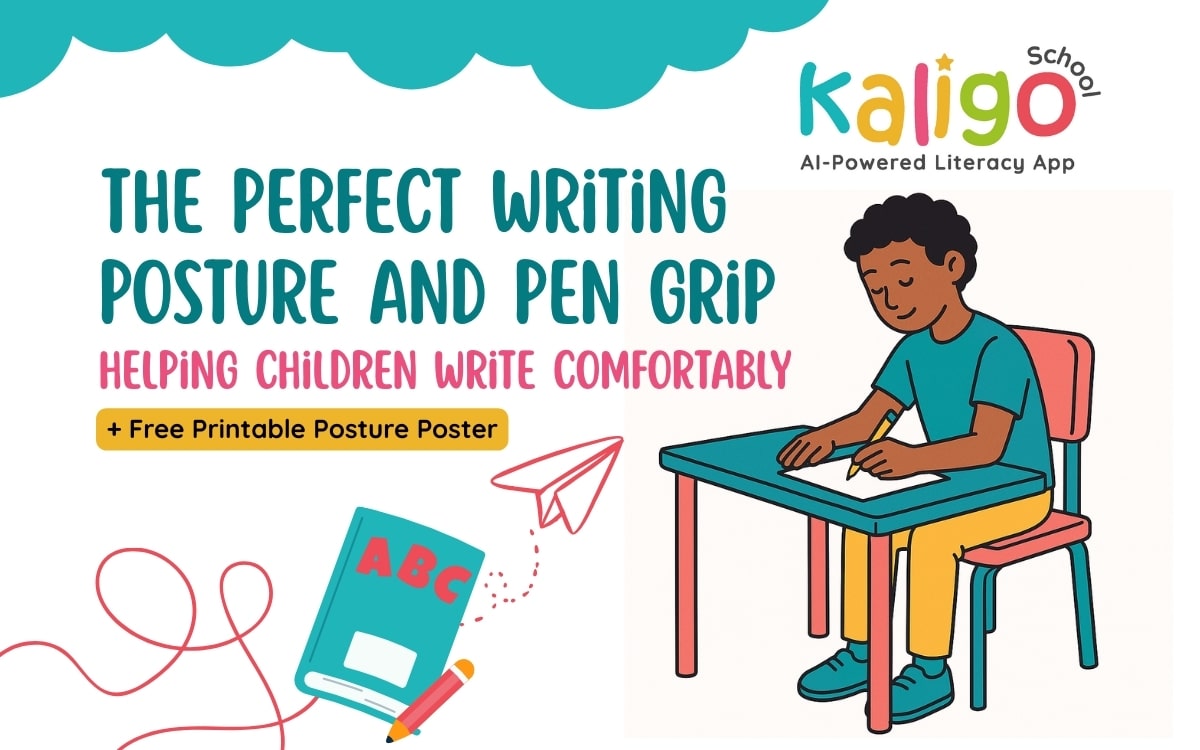
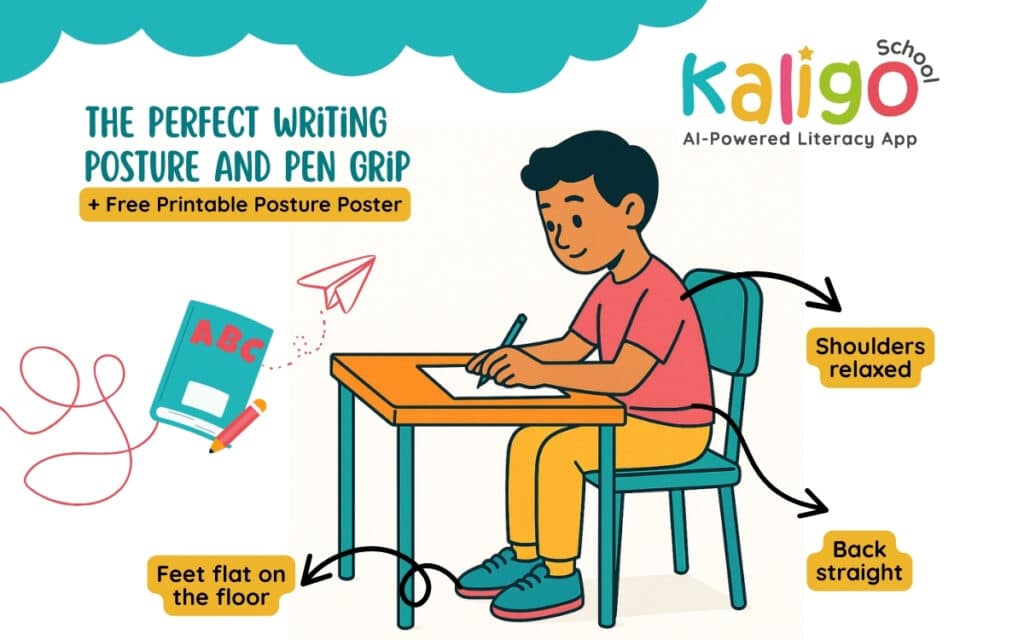
A comfortable, balanced position is key. Here’s a simple checklist to share with your class:
- Feet flat on the floor (no dangling legs or crossed ankles.)
- Knees bent at 90 degrees, not tucked under the chair.
- Back straight and supported by the chair.
- Shoulders relaxed, not hunched.
- Elbows resting comfortably on the table.
The Right Distance from the Paper
Children should sit about a forearm’s length away from the desk. This prevents leaning too close, which can strain the neck and back.
Active and Supporting Hand Position
- The writing hand does the work, while the supporting hand keeps the paper steady.
- Encourage children to place their non-writing hand gently on the paper, not gripping or pushing too hard.
How to Hold the Pen while writing?
The most recommended grip is the tripod grip:
- Thumb and index finger hold the pen,
- Middle finger supports from underneath,
- Pen rests lightly on the web between thumb and index finger,
- Held at a 45-degree angle, not upright.
How Kaligo Supports Posture and Pen Control
Kaligo, an AI-powered literacy app, places a strong emphasis on making the process of learning to write enjoyable while helping children develop better handwriting. Here’s how our app supports teachers and students in improving pen control:
- Pen Pressure Practice: In this practice, children learn how much pressure to apply for better pen control, reducing strain and improving writing comfort.
- Palm Rejection Technology: This feature allows children to replicate the same natural posture when writing on a tablet as they would on paper.
- Video Tutorials: Step-by-step guides inside the app demonstrate the correct way to hold a pen.
Keep in mind that the ergonomic design of the Kaligo stylus (its weight, size, and shape) is perfectly suited for young learners, helping them experience a more natural and comfortable grip. To learn more tips and tricks for choosing the right stylus, click here.
Extra Support :
If you have a health professional account, you can access exclusive finger gymnastic exercises and specialist content designed to strengthen fine motor skills and improve grip.
Download Our Free Posture Poster
We’ve created a high-resolution posture and pen grip poster you can:
- Print large enough for your classroom wall, or
- Print small copies for each child to stick in their notebooks.
Simply download it and make posture a part of your classroom culture!
More Free Classroom Printables in the Kaligo Library

These phot placards are just one of many free printable resources for teachers in the Kaligo library! From class rewarding coupons to interactive phonics games, we’ve got everything you need to make learning fun and engaging.
You can simply find out some other free printable resources in our prevoius blogs:
- Year 1 Spelling list
- Free Printable Spelling FlashCards for year 1
- Free Printable Year 2 Spelling Flashcards
- Free Printable Year 3 and 4 Spelling Flashcards
- Free Year 5 and Year 6 Spelling Flashcards
- Students’ Rewarding Certificates
- and more…
Already using Kaligo?
Head to your Teacher’s Portal now to download everything!