Reading is one of the most important skills a child can develop. In England, reading in primary schools sits at the heart of the curriculum because it supports academic achievement, language development, critical thinking, and personal growth. Strong reading skills allow students to access every subject, become independent learners, and participate fully in society.
For this reason, the National Curriculum for English and Ofsted place significant emphasis on early reading instruction and reading for pleasure. Schools are expected to ensure that every child develops the knowledge and skills needed to become a fluent, confident reader.
Reading in the English Curriculum: Key Objectives
Reading in primary schools is a central component of the English curriculum because it provides the foundation for learning across all subjects. According to the curriculum and the government’s Reading Framework, students should develop both the technical skills required for reading and a lifelong enjoyment of books.
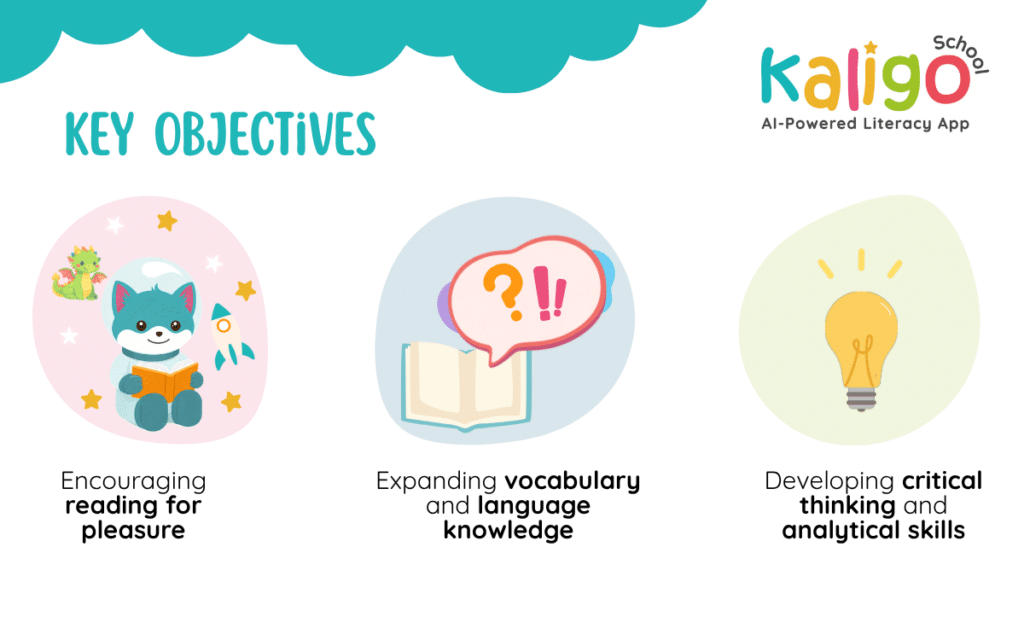
The main objectives of reading instruction include:
- developing reading fluency and comprehension;
- encouraging reading for pleasure;
- expanding vocabulary and language knowledge;
- introducing students to Britain’s literary heritage;
- acquiring knowledge through reading;
- developing critical thinking and analytical skills.
When students read regularly, they encounter new vocabulary, ideas, and perspectives. This not only improves literacy but also supports achievement in subjects such as science, history, geography, and mathematics.
How Reading in Schools Supports Academic Success
The importance of reading extends far beyond English lessons. Reading is often described as the gateway to the curriculum because it allows students to access information, understand instructions, and engage with increasingly complex content.
Reading also contributes to vocabulary acquisition and background knowledge. The more children read, the more knowledge they accumulate, making it easier to understand new concepts and connect ideas across different disciplines.
Worth Noting : Children who become fluent readers at an early age are generally more successful across all areas of learning. They can work more independently, conduct research, solve problems, and develop a deeper understanding of the subjects they study.
This is one of the reasons why reading is considered one of the strongest predictors of long-term academic success.
Why Ofsted Prioritises Reading in Schools
Ofsted regards reading as a key indicator of educational quality. In its article, Getting All Pupils Reading, the inspectorate explains that reading is fundamental to students’ success throughout their education.
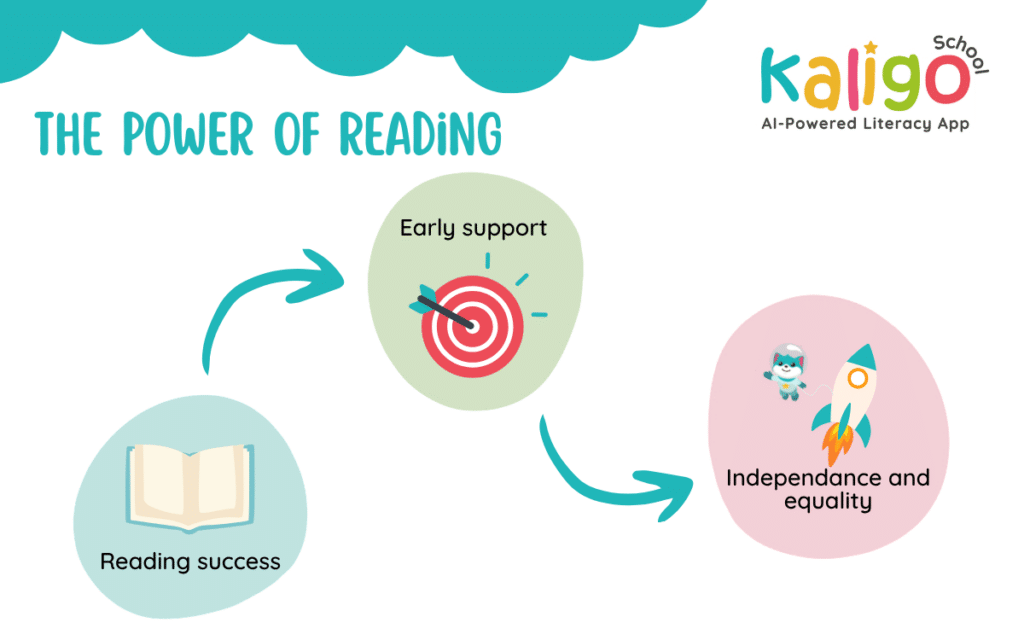
Schools are expected to ensure that all children learn to read accurately, fluently, and with understanding. Inspectors pay particular attention to early reading because difficulties that are not addressed quickly can have a lasting impact on academic achievement.
Strong reading skills promote intellectual independence. Students who can read confidently are better able to learn independently, access information, and engage fully with the wider curriculum.
By helping all children become successful readers, schools can also reduce educational inequalities and improve outcomes for disadvantaged students.
The Matthew Effect and Reading in Schools
One of the most influential theories in reading education is the Matthew Effect, developed by psychologist Keith Stanovich in 1986.
Research on reading ability and cognitive development demonstrates that children who learn to read quickly and effectively tend to read more frequently than their peers.
As they read more, they continue to strengthen their vocabulary, general knowledge, reading comprehension, and fluency. These advantages make future learning easier and contribute to greater academic success.
In contrast, children who struggle with reading often read less and may avoid reading activities altogether. This limits their exposure to language and knowledge, making reading increasingly difficult over time.
As a result, the gap between strong readers and struggling readers can widen throughout a child’s education. This phenomenon helps explain why Ofsted and many educational systems prioritise systematic and effective early reading instruction.
How Reading in Schools Promotes British Values and Social Cohesion
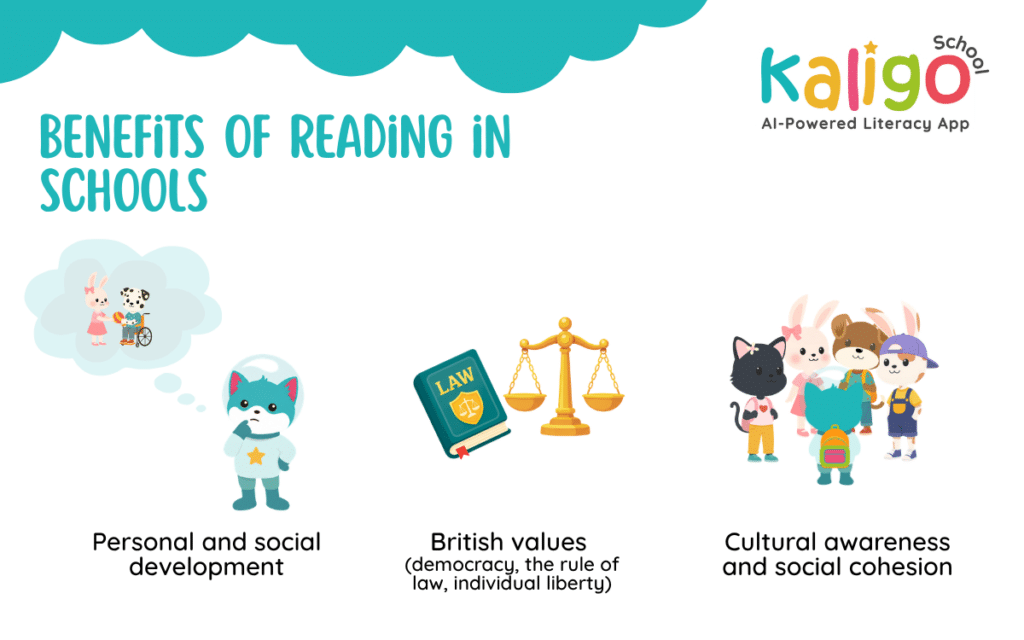
The benefits of reading extend beyond academic achievement. Reading in primary schools also plays a vital role in personal development, citizenship education, and social cohesion.
Through literature, students encounter different cultures, experiences, and perspectives. Stories help children understand the emotions of others, develop empathy, and challenge stereotypes. Reading encourages reflection on fairness, equality, respect, and inclusion.
These outcomes closely support the promotion of British Values in schools.
Through discussions about books and characters, students learn the principles of democracy by sharing opinions and considering alternative viewpoints. Literature also helps children understand the rule of law by exploring rules, responsibilities, and consequences within stories.
Many texts encourage reflection on individual liberty, helping students think about personal choices, rights, and responsibilities. Reading in primary schools promotes mutual respect by exposing children to experiences that may differ from their own, while books featuring diverse communities help foster tolerance and understanding of different cultures and beliefs.
By developing empathy and cultural awareness, reading contributes to a more inclusive and cohesive society.
Why Reading in Schools Remains a National Priority
The importance of reading in schools cannot be overstated. Reading is at the heart of the English curriculum because it supports literacy, academic achievement, critical thinking, and personal development.
Strong reading skills enable students to access the curriculum, acquire knowledge, and become independent learners. Reading also helps schools promote British Values, develop empathy, and reduce educational inequalities.
For these reasons, Ofsted, policymakers, and educators continue to place reading at the centre of educational success, ensuring that every child has the opportunity to become a confident and lifelong reader.
Support reading success with Kaligo
Learning to read and learning to write go hand in hand. While reading is essential for vocabulary development, comprehension, and academic success, handwriting practice also plays an important role in children’s literacy journey.
Developing strong handwriting skills helps children improve letter recognition, reinforce phonics knowledge, and build familiarity with word structures. As students learn to form letters and words correctly, they strengthen the connections between reading and writing, supporting overall literacy development.
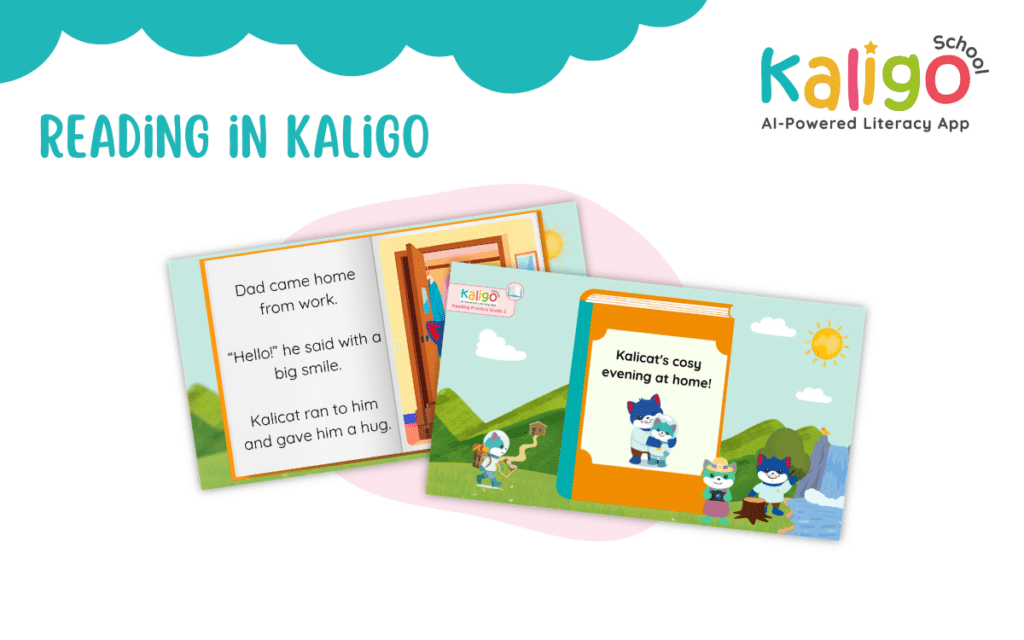
Kaligo supports this approach to literacy through interactive handwriting activities and personalised learning experiences. By helping students recognise, form, and practise letters and words, Kaligo reinforces key early reading skills while building confidence in written expression.
Teachers can explore Kaligo with a free 14-day trial and discover how combining reading and writing practice can help students become more confident, engaged, and successful learners.