
Reading is one of the most important skills a student learns. However, it is not simply the ability to recognise letters or sound out words. True reading means understanding, interpreting and making meaning from written language.
To become a skilled reader, a student needs to bring together several abilities: letter recognition, phonics, vocabulary, fluency, comprehension, memory and thinking skills. These skills support not only literacy, but also language development, attention, reasoning and learning across the curriculum.
The impact of reading also extends into everyday life. It helps students access knowledge, grow in confidence and become more independent learners. In addition, it supports cognitive development by strengthening memory, attention, vocabulary and higher-order thinking.

What Does It Mean to Know How to Read?
Knowing how to read means much more than saying words aloud. A skilled reader needs both word recognition and language comprehension.
Word recognition is the ability to identify written words accurately. Language comprehension is the ability to understand what those words, sentences and texts mean. Together, these two elements support skilled reading. A student may be able to decode a sentence but still not fully understand it. Similarly, a student may have strong spoken language but struggle to access meaning in print if they cannot read the words accurately.
Skilled reading happens when decoding becomes accurate and fluent enough for the reader to focus on meaning. Good readers ask questions, make connections, notice details, infer meaning and build understanding as they move through a text. Rather than simply reading words, they think with and through language.
Reading also opens access to learning. Students who read well can learn more independently in subjects such as science, history, geography and mathematics. When reading is difficult, accessing the wider curriculum can also become challenging, even for capable learners.
Why Phonics Is Essential for Developing Reading Skills
Phonics is a key part of learning to read. It teaches students how written letters connect to the sounds of spoken language. This connection is known as grapheme–phoneme correspondence, or GPC.
A phoneme is a speech sound. A grapheme is the letter or group of letters that represents that sound. For example, in the word ship, the sound /sh/ is represented by the grapheme sh.
Systematic phonics gives students a reliable way to read unfamiliar words. Instead of guessing from pictures or context, they learn how the alphabetic code works. This helps them decode new words more accurately and become more independent readers.
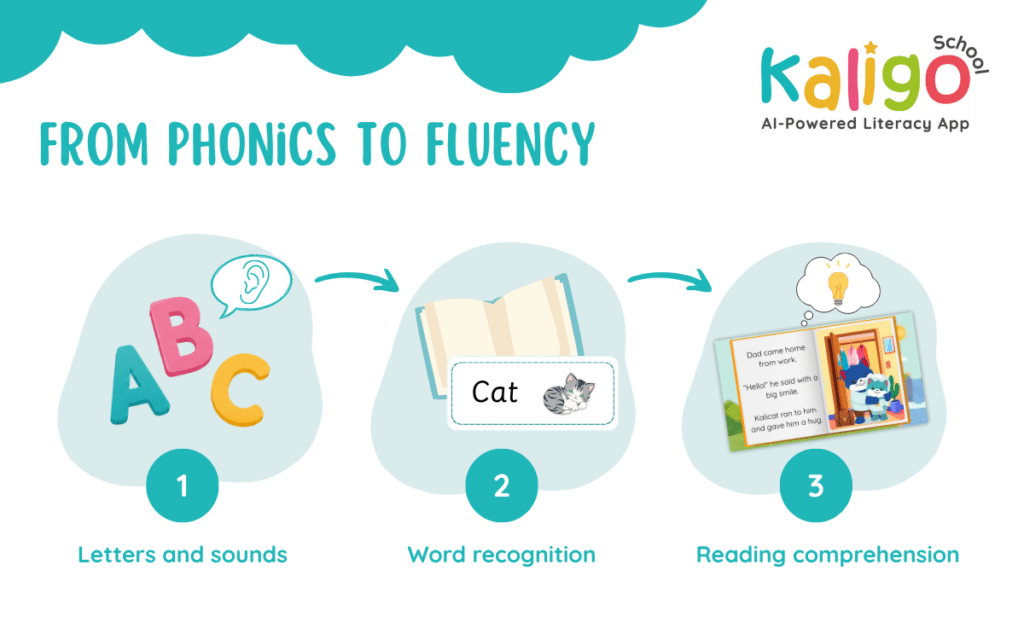
The aim of phonics, however, is not for students to sound out every word forever. Its goal is to help them move towards automatic word recognition. At first, decoding takes effort. A beginner reader may need to pause, sound out each part of a word and blend the sounds together. With practice, many words become familiar and can be read quickly and accurately.
This automaticity matters because it frees the student’s mind to focus on reading comprehension.
From Phonics to Reading Fluency
Reading fluency is the bridge between decoding and understanding. Fluent readers read accurately, smoothly and with expression. Because they do not need to stop at every word, they can focus on the meaning of sentences and the structure of the whole text.
Fluency is important because working memory is limited. If a student uses too much mental effort identifying individual words, there is less capacity left to understand the text. Once word reading becomes automatic, the student can think more deeply about characters, information, vocabulary and ideas.
Comprehension does not begin only after phonics is complete. From their earliest years, students develop comprehension through talk, songs, rhymes, stories and shared reading. These early language experiences prepare them to understand written texts later and help them see reading as meaningful and enjoyable.
Reading Comprehension Skills: Why Vocabulary, Talk and Stories Matter
Reading comprehension depends strongly on language. Students need a wide vocabulary and broad background knowledge to understand what they read. Books introduce them to words, ideas and sentence structures that may not appear in everyday conversation.
Adults therefore play an important role in reading development. When they read aloud, talk about stories, explain new words and encourage students to predict, question and reflect, they strengthen comprehension.
Shared reading helps students understand that books carry meaning and that stories have structure. Through stories, they learn about characters, settings, problems, emotions and events. Poems, rhymes and non-fiction texts also contribute to literacy development in different ways.
Importantly, reading should not become only a technical task. Phonics gives students the tools to unlock words, but books give them reasons to read. Students need to experience reading as enjoyable, purposeful and connected to real meaning.
Reading Skills and Cognitive Development
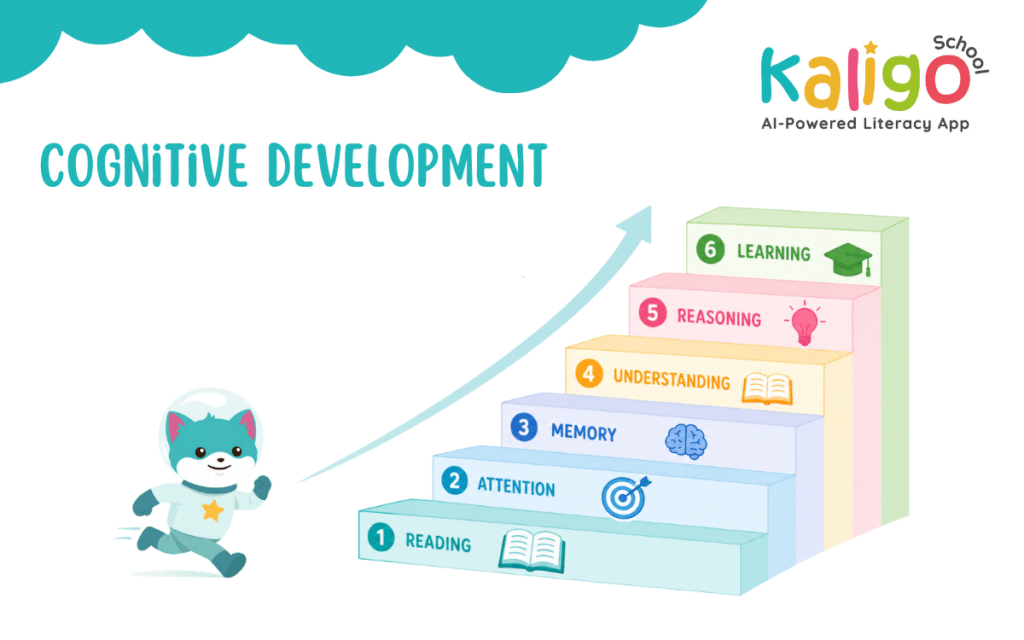
Reading has a powerful impact on the mind. Sustained focus on language and meaning strengthens attention over time. Memory is also supported because readers hold words, events and ideas in mind while connecting them together. At the same time, books build vocabulary and knowledge by exposing readers to new information and more complex language.
Higher-order thinking also develops through reading. Readers make inferences, compare ideas, predict outcomes and evaluate information. Often, they need to understand things that are not directly stated, such as how a character feels or why an event happened.
These thinking skills are useful far beyond reading lessons. They support problem-solving, reasoning, discussion and learning in every subject. For this reason, reading contributes to both academic success and cognitive development.
Reading as a Foundation for Learning
Reading begins with sounds, letters and words, but it grows into something much bigger: comprehension, knowledge, imagination, reasoning and independence.
Strong reading skills affect far more than school performance. Literacy helps students access knowledge, understand information, follow instructions and take part more fully in everyday life. As students grow older, reading skills can influence confidence, further education, employment opportunities and lifelong learning.
To know how to read is not only to decode words on a page. It is to make meaning, think critically, learn from text and connect with the wider world.
Support reading success with Kaligo
Learning to read and learning to write go hand in hand. While reading is essential for vocabulary development, comprehension, and academic success, handwriting practice also plays an important role in children’s literacy journey.
Developing strong handwriting skills helps children improve letter recognition, reinforce phonics knowledge, and build familiarity with word structures. As students learn to form letters and words correctly, they strengthen the connections between reading and writing, supporting overall literacy development.
Handwriting practice also contributes to social and emotional learning by helping children develop patience, perseverance, focus, and confidence. As they practise, make progress, and take pride in their work, students build a stronger sense of self-efficacy and become more engaged in their learning.
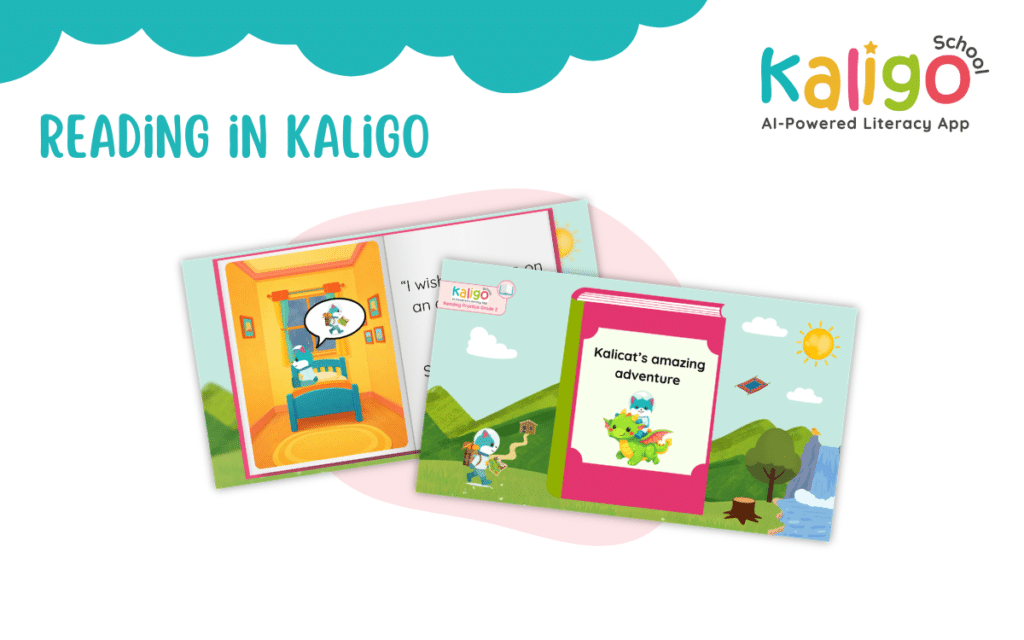
Kaligo supports this approach to literacy through interactive handwriting activities and personalised learning experiences. By helping students recognise, form, and practise letters and words, Kaligo reinforces key early reading skills while building confidence in written expression.
Teachers can explore Kaligo with a free 14-day trial and discover how combining reading and writing practice can help students become more confident, engaged, and successful learners.