
Ofsted is the government organisation responsible for inspecting schools, colleges, nurseries, and childcare services in England. It also publishes Ofsted reports to help parents and carers understand the quality of education and care provided. Its job is to make sure students receive a high standard of education and care.
Recent reports have shown a clear shift in the way schools are evaluated during an Ofsted inspection. Outcomes and attainment data still matter. However, inspectors now place greater emphasis on curriculum quality, inclusion, and how effectively students are supported to make progress over time.
Key priorities increasingly include:
- Inclusion and SEND provision
- Reducing disadvantage gaps
- Early literacy and writing development
- Understanding how students learn and progress across the curriculum
The Growing Importance of Handwriting in Ofsted Reports
Within this broader context, handwriting is increasingly recognised as more than a presentation skill. Strong handwriting fluency supports literacy development, classroom participation, and confidence. It also helps students communicate their ideas more effectively in writing.
Handwriting challenges can become a barrier to learning for younger students and those with SEND or fine motor difficulties. Supporting handwriting development also contributes to accessibility, adaptive teaching, and inclusion. These are all important aspects of a strong inspection framework.
![Ofsted reports highlighting the benefits of handwriting fluency for literacy, classroom participation and confidence
quote from the Government response to the Curriculum and Assessment Review in November 2025, it says : A mastery of listening, speaking and writing will help [students] express their thoughts, present their ideas, and find their voice.](https://www.kaligo-apps.com/wp-content/uploads/2026/05/Blogs-visual-materials-Q2-Q3-2025-1200-x-750-px-4-1024x640.png)
How Handwriting Supports Writing in Ofsted Reports
The Ofsted English research review and Ofsted reports highlight the importance of transcription skills, including handwriting, spelling, and sentence construction, in helping students become confident writers. Students who struggle with letter formation or handwriting fluency use much of their mental effort on the physical act of writing.
Developing Automaticity in Handwriting
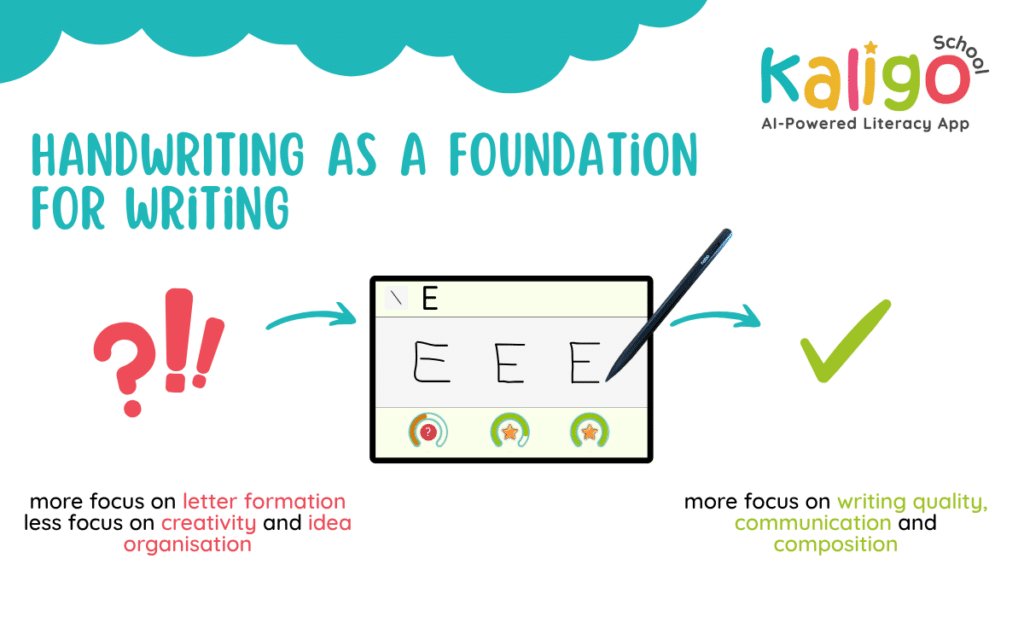
This idea is closely linked to Cognitive Load Theory. If handwriting is slow or not automatic, students have less working memory available. This affects vocabulary choices, sentence structure, creativity, and idea organisation.
The goal of effective handwriting instruction is therefore to build automaticity. Once letter formation becomes fluent, students can focus more on composition, communication, and writing quality.
Why Structured Practice Matters for Skill Development
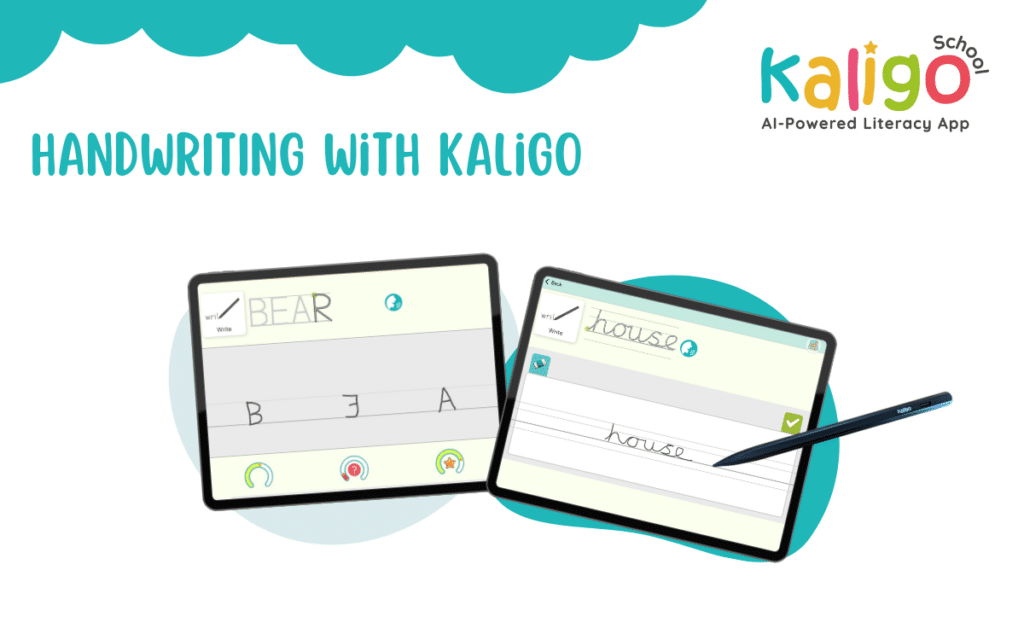
This is where structured practice can play an important role. Tools such as Kaligo provide guided handwriting activities with personalised feedback. These activities help students improve letter formation, writing fluency, and motor coordination. By reinforcing correct movement patterns and repetition, students can gradually develop greater confidence and independence when writing.
Supporting Early Handwriting Development in Primary Schools
Effective handwriting teaching usually begins with explicit instruction in the early years and Key Stage 1. This includes:
- Correct pencil grip
- Posture and seating position
- Fine motor development
- Accurate letter formation
- Consistent modelling from teachers
The aim is not simply neat presentation. It is to help students write comfortably, efficiently, and automatically over time.
Building Long-Term Handwriting and Writing Fluency
Many literacy approaches still prioritise pencil-and-paper activities in the early stages of learning. Handwriting practice supports both fine motor development and early cognitive processing. Digital tools can still complement this process effectively when they reinforce core handwriting principles rather than replace them.
How Structured Digital Practice Can Support Learning
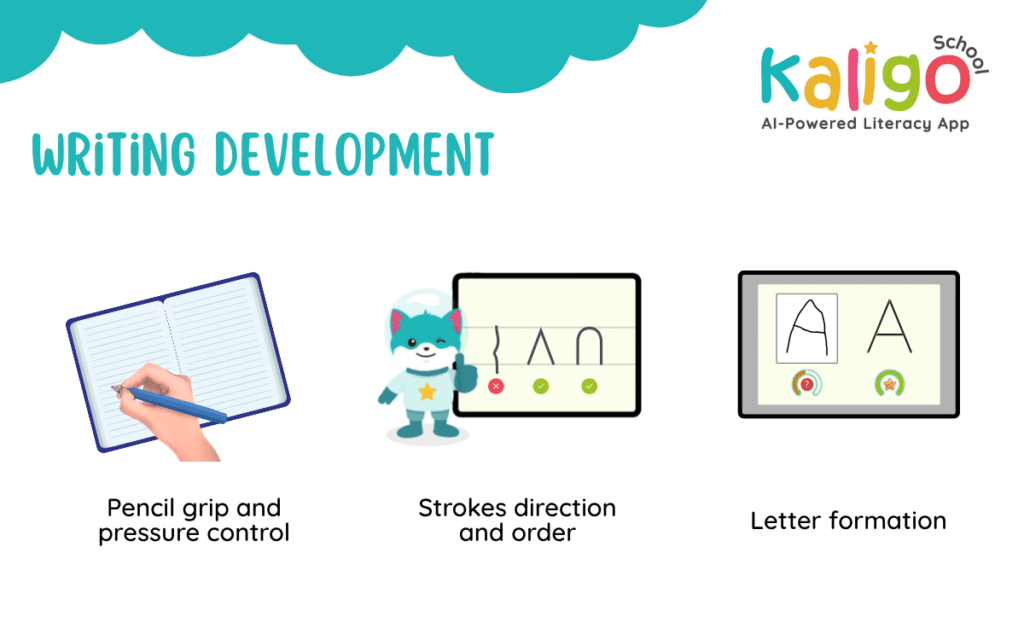
For example, Kaligo combines stylus-based handwriting practice with real-time feedback to help students improve:
- Pencil grip and pressure control
- Letter sizing and spacing
- Stroke direction and order
- Letter formation accuracy
- Writing fluency
Immediate and personalised feedback helps students correct errors during practice. This prevents mistakes from becoming repeated habits. Teachers can replay students’ handwriting traces to identify where difficulties arise. They can also view common challenges across the class. This helps them provide targeted support without interrupting classroom flow.
Handwriting and Literacy in Ofsted Reports
Strong handwriting teaching is about helping students access learning more effectively. Students who can form letters confidently and write fluently can focus more on expressing ideas, developing vocabulary, and engaging with written tasks across the curriculum.
As schools continue to prioritise literacy, inclusion, and long-term student development, handwriting remains an important foundational skill within a broad and balanced writing curriculum.
Handwriting Supports Learning Across the Curriculum
Beyond literacy itself, developing automaticity in handwriting also supports learning across the wider curriculum. When handwriting becomes fluent and effortless, students can focus more on thinking, understanding, and expressing ideas. They spend less effort on the physical act of writing. Ofsted reports and research reviews highlight that secure transcription skills, including handwriting, are foundational to students’ success and help them access learning more effectively across subjects. This has benefits not only in English, but also in subjects such as science, history and geography, where students need to explain reasoning, record observations and communicate knowledge clearly.
According to Ofsted’s English Subject Report, many schools introduce complex writing tasks before students have fully automatised foundational transcription skills. The report also notes that primary students do not always receive enough structured teaching or practice. As a result, many do not become fluent in spelling and handwriting. Kaligo helps address this challenge by providing frequent, guided, and adaptive practice that strengthens these core skills progressively and at each student’s own pace.
Supporting Handwriting Development with Kaligo
You want to improve handwriting in your classroom? Kaligo helps students develop essential writing skills through structured handwriting practice. It also provides real-time personalised feedback and adaptive learning activities. From pre-writing activities, pencil grip, and letter formation to spacing, fluency, and writing confidence, Kaligo supports teachers in helping every learner progress at their own pace, particularly younger students who may benefit from additional support. Kaligo also includes spelling activities in which students write words in manuscript writing, helping them strengthen both transcription and spelling skills through meaningful writing practice.
Start your free 14-day trial now to see your students’ progress!