
Handwriting practice is about more than learning to form letters correctly. Free Writing turns it into a powerful tool that helps students express ideas, answer questions, tell stories and demonstrate their learning across the curriculum.
This brand-new Kaligo exercise is designed to help students use handwriting in a more open, meaningful and flexible way.
Until now, Kaligo has supported learners as they developed essential writing skills, including letter formation, word writing and spelling. With Free Writing, students can take the next step by using these skills to write complete sentences and short texts, allowing them to communicate ideas, respond to questions, reflect and learn.
What Is Kaligo’s Free Writing Exercise?
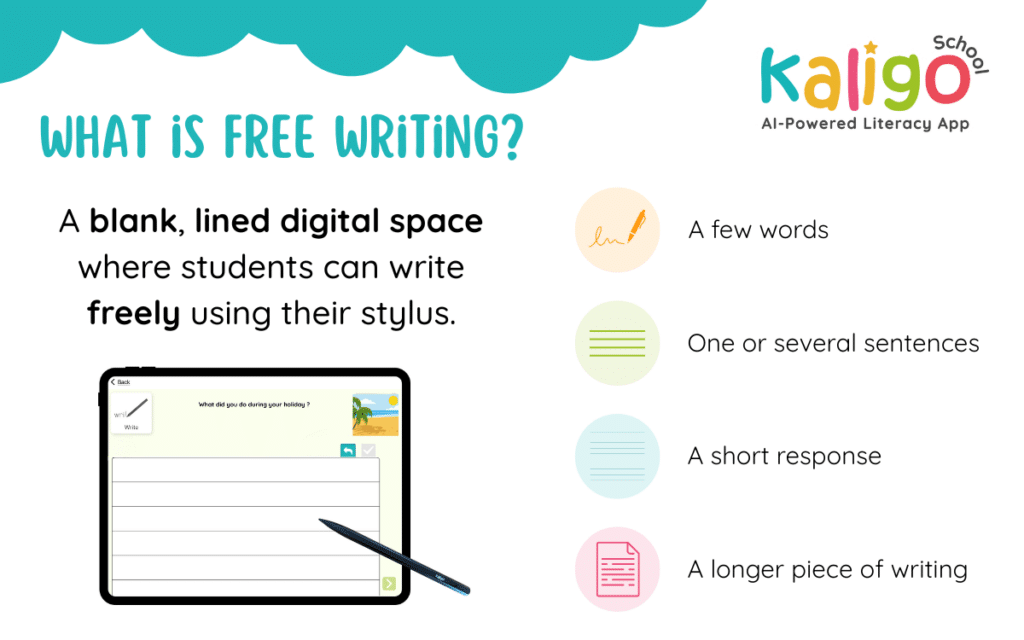
Free Writing gives students a blank, lined digital writing space where they can write freely using a stylus in response to written and/or audio instructions.
Flexible Handwriting Practice for Every Learner
Because every learner and classroom activity is different, Free Writing supports a range of response lengths. For example, students can write:
- a few words;
- one or several sentences;
- a short response;
- a longer piece of writing.
This flexibility allows teachers to use the familiar Kaligo environment for a wide variety of classroom activities, from quick writing tasks to more developed written work.
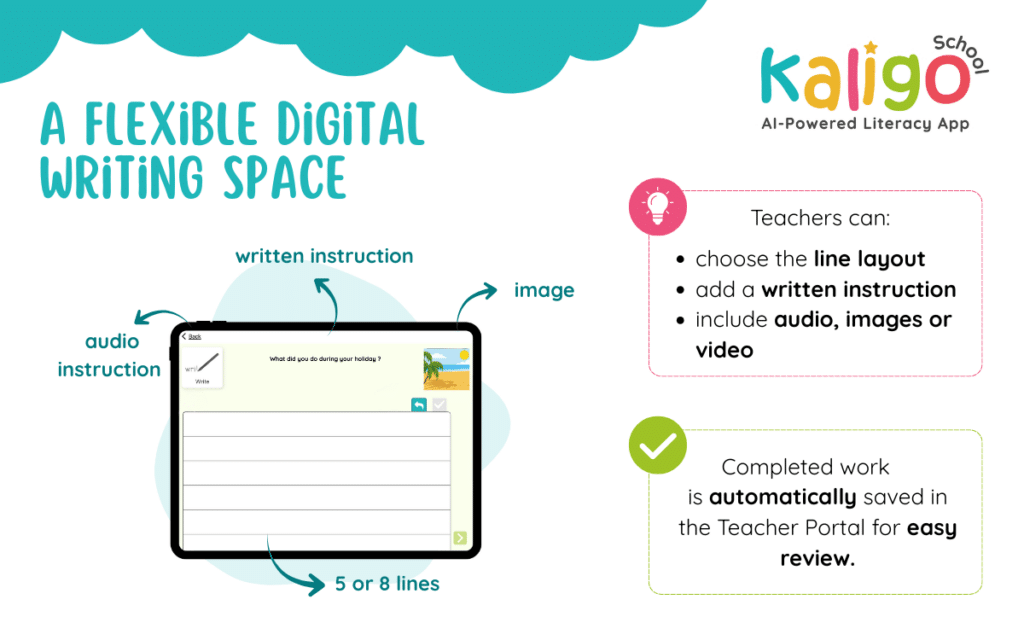
A Flexible Digital Writing Space
For each Free Writing exercise, teachers Acan:
- choose a writing layout with five or eight lines;
- add written instructions;
- include audio instructions;
- enrich the activity with an image or video;
- assign different tasks to individual students or groups.
These options make it easy to create clear and engaging writing prompts while adapting each activity to different ages, abilities and learning needs.
Review Students’ Handwriting Practice in the Teacher Portal
Once a student has completed a Free Writing activity, a screenshot of their work is automatically saved in the Teacher Portal. Teachers can access and review completed writing tasks without collecting devices or managing separate files.
One Writing Space, Endless Possibilities
Free Writing has been designed to support the handwriting activities teachers already use every day, all within one flexible digital space.
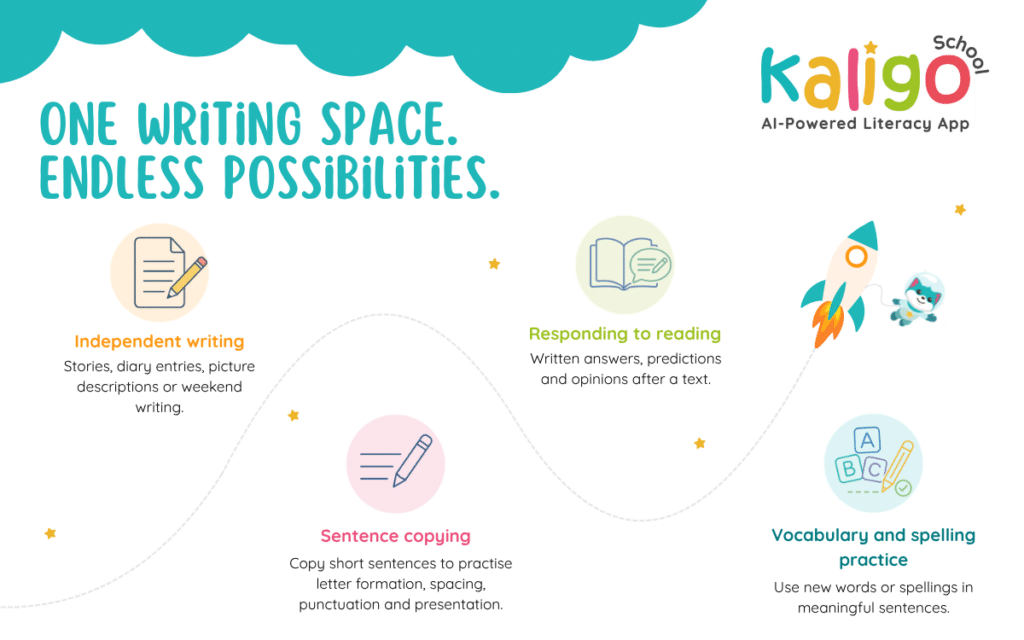
Independent and Creative Writing Activities
Teachers can use it for independent writing, for example by asking students to write about their weekend, describe a picture or create a short story. It can also support reading comprehension with prompts such as “What do you think will happen next?” or “Why was the character upset?”
Students can use Free Writing for independent writing activities such as:
- stories;
- diary entries;
- weekend news;
- descriptions inspired by an image;
- personal reflections;
- creative writing prompts.
These activities give students the freedom to develop their ideas while practising handwriting for a clear and meaningful purpose.
Handwriting Practice for Reading Comprehension
Free Writing can also be used alongside reading and listening activities. Students can answer comprehension questions, make predictions, explain their ideas and share opinions while strengthening both their handwriting and their understanding of a text.
Sentence Copying and Handwriting Practice
Teachers can also create sentence-copying activities to help students practise letter formation, spacing, punctuation and presentation. New vocabulary and spelling patterns can be explored in context by asking students to use them in meaningful sentences.
Vocabulary and Spelling Activities
This connects handwriting practice with wider language development and helps students understand how new words are used.
Cross-Curricular Writing and Assessment Activities
Beyond literacy lessons, it can support topic-based learning, cross-curricular writing, creative tasks and short assessment activities.
Why Use Free Writing in the Classroom?
Free Writing is not designed to replace paper, notebooks or exercise books. Instead, it complements paper-based handwriting practice by bringing everyday classroom writing into the familiar Kaligo environment.
Benefits of Free Writing for Teachers
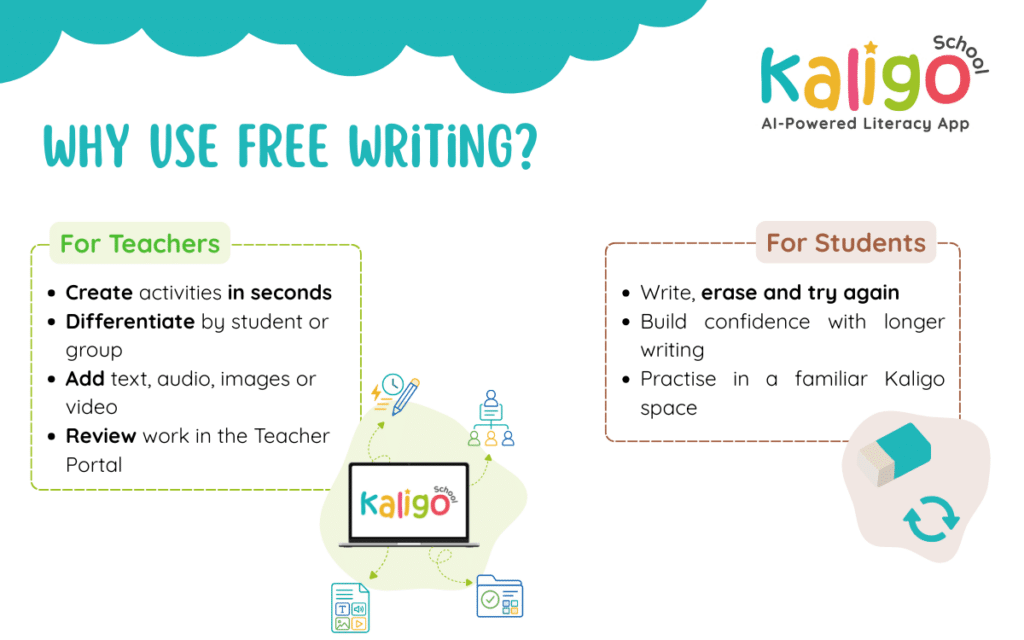
For teachers, Free Writing offers a quick and adaptable way to create digital writing activities.
Tasks can be prepared in seconds, differentiated for individual students or groups and enriched with written instructions, audio, images or video.
Teachers can adjust the level of support, the expected response and the activity content according to each student’s needs.
Completed Free Writing activities are available directly in the Teacher Portal, making it easier to:
- review student responses;
- follow individual progress;
- compare work over time;
- identify areas that may need additional support.
Therefore, teachers can spend less time managing completed work and more time supporting each student’s writing development.
Benefits of Free Writing for Students
For students, Free Writing provides a familiar and engaging space where they can write, erase, edit and try again.
This encourages learners to experiment with language, develop their ideas and build confidence without worrying about making permanent mistakes.
By completing regular Free Writing activities, students can gradually develop the handwriting fluency, confidence and stamina needed for longer pieces of writing.
Designed for Everyday Classroom Handwriting Practice
Free Writing has been created with everyday teaching in mind. It provides a flexible digital space that complements, rather than replaces, traditional handwriting practice.
Students can continue developing their handwriting in exercise books while also benefiting from structured Free Writing activities in Kaligo.
Support Literacy and Writing Across the Curriculum
The feature can support a wide range of teaching goals, including:
- handwriting practice;
- sentence construction;
- literacy development;
- vocabulary and spelling work;
- reading comprehension;
- creative writing;
- written work across the curriculum.
Adapt Handwriting Practice Activities to Individual Learning Needs
Teachers can easily adapt each activity by changing the instructions, adding supporting resources and adjusting the expected response for individual learners or groups.
Once the work is completed, it is automatically saved in the Teacher Portal, making it simple to access, review and follow each student’s writing development.
From Learning to Write to Writing to Learn
As students develop their handwriting, they also need opportunities to use it for real purposes.
Free Writing creates a bridge between practising individual handwriting skills and applying those skills independently in meaningful classroom contexts.
Whether students are copying a sentence, responding to a story, practising new vocabulary or creating a piece of their own, it gives them the space to put their handwriting into action.
With Free Writing, students move beyond simply learning how to write. They begin using writing as a tool for thinking, communicating and learning.